


TARGET Solar
BLOGS CENTER
Release Time: Sep 29,2025
County-wide photovoltaic promotion: policy-driven, "photovoltaic +" multi-field integration

- Policy-Driven: Rooftop PV Becomes a Key Tool for Energy Transition
CCTV's "Focus Interview" special feature, "Ultra-Low Energy Consumption, Green Buildings," focused on "Integrating Energy Reduction with Architecture." During this critical period of energy structural transformation, developing zero-carbon buildings and reducing energy consumption and emissions in the building sector have become top priorities for the industry.
Multiple departments continue to strengthen policies.
The Ministry of Housing and Urban-Rural Development and 15 other departments issued the "Opinions on Strengthening Green and Low-Carbon Construction in County Cities," which clearly mandates increasing the proportion of photovoltaic power generation on building rooftops and vigorously promoting the use of distributed photovoltaic and smart photovoltaic systems.
The National Energy Administration's "County-Wide Photovoltaic Promotion Policy" further specifies the required installed capacity ratios:
Rooftops of Party and government buildings: at least 50% photovoltaic power generation capacity;
Rooftops of public buildings such as schools, hospitals, and village committees: at least 40%;
Rooftops of industrial and commercial buildings: at least 30%;
Rural residential rooftops: no less than 20%.
Institutions predict that this policy will drive 713 GW of installed photovoltaic capacity.
National pilot programs are progressing rapidly: 25 provinces have submitted pilot plans for approximately 500 counties. Based on a 200 MW capacity per county, the total installed capacity of distributed photovoltaic capacity could exceed 100 GW.
- PV in Every Household: A Win-Win Choice for Rural Revitalization and the "Dual Carbon" Initiative
Idle rural rooftops are a natural fit for photovoltaics: they provide thermal insulation and waterproofing, while also generating revenue through power generation. After installing photovoltaics, villagers can earn passive income from electricity bills or investment, perfectly meeting the needs of rural development.
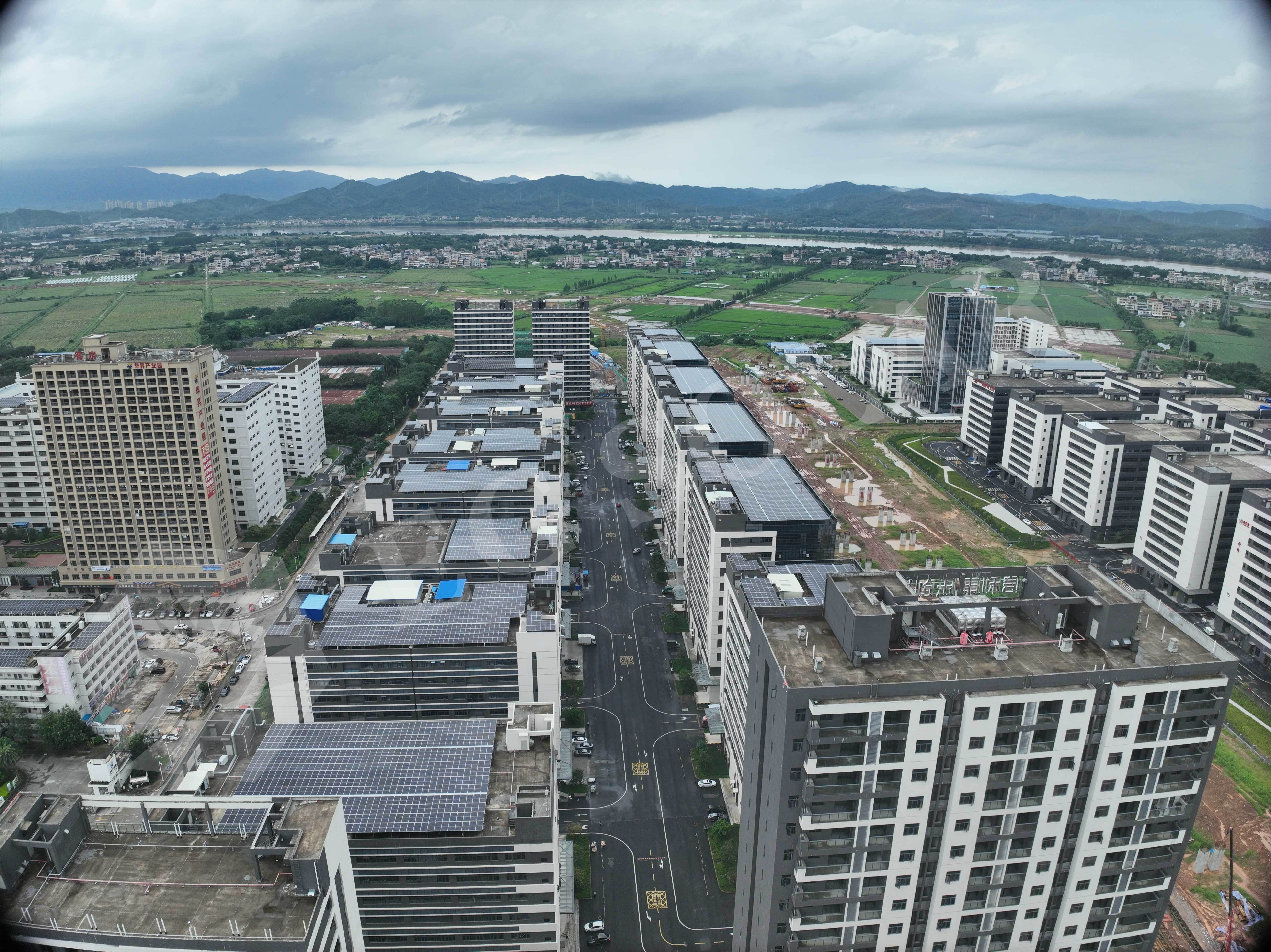
The promotion of integrated photovoltaic buildings and distributed photovoltaic systems across entire counties presents a significant opportunity for rural revitalization: farmers benefit from photovoltaics, their own electricity becomes greener and cleaner, and the rural ecological environment is improved. "Every household equipped with photovoltaics" is rapidly moving from a beautiful vision to reality.
"China's Photovoltaic Development Outlook to 2050 (2019)" predicts:
By 2030, my country's installed photovoltaic capacity will lead all power sources;
By 2035, photovoltaic power generation will lead all power sources.
Photovoltaics is not only a core industry with global competitiveness in my country, but also a key link in the construction of ecological civilization. It has now formed a development pattern of "photovoltaic +" multi-field ubiquitous integration.
- "Photovoltaic Plus": Cross-industry Integration, Creating Infinite Value
Photovoltaic is no longer a "sole power generation tool" but is deeply integrated into various fields, giving rise to new industrial forms and social value.
1. Photovoltaic Plus Traditional Energy: Giants Like Sinopec Seize the Market
Driven by the dual-carbon strategy, traditional energy companies like Sinopec are accelerating their transformation to photovoltaics.
Sinopec plans to complete its deployment by 2025: 5,000 charging and swapping stations, 1,000 oil-hydrogen hybrid stations, and 7,000 distributed photovoltaic sites.
Currently, over 100 "photovoltaic plus gas stations" have been built across China, and the number of "photovoltaic plus petrochemical" integration cases is expected to explode in the future.
2. Photovoltaics + Industry: Decarbonization for High-Energy-Consuming Industries
The Ministry of Ecology and Environment is promoting the inclusion of the steel industry in the national carbon market (the third largest industry to be included, following the power and building materials industries). Photovoltaics provides green power support for the industrial sector, accelerating the low-carbon transition of the industry.
3. Photovoltaics + Energy Storage: Natural Complementarity, Addressing the Pain Point of Power Generation Fluctuations
Photovoltaic power generation is derived from sunlight and is cyclical and transient. Energy storage can store excess power, preventing waste. Therefore, photovoltaic systems are often equipped with energy storage equipment. The rise of the photovoltaic industry has directly driven the explosive growth of the energy storage industry.
4. Photovoltaic + Animal Husbandry
Transforming Barren Gobi Deserts into "Eco-Pastures" Centralized photovoltaic power stations are often built on hillsides, grasslands, and deserts. The shading of photovoltaic panels reduces surface water evaporation, while manual panel cleaning increases the water supply. Over time, this can lead to the growth of abundant weeds within the power station. Farmers utilize this weed to develop animal husbandry, which not only protects the power station environment but also generates economic benefits. In some desert areas, the "photovoltaic + animal husbandry" model has even transformed deserts into oases, reaping both ecological and social benefits.
5. Photovoltaics + Aquaculture: "One Site, Two Uses," Double the Profits
The cross-industry integration of photovoltaics and aquaculture:Raising geese beneath photovoltaic panels, or installing photovoltaic panels above cattle, sheep, pigs, rabbits, and other farms.
Achieving the dual benefits of "power generation + aquaculture" has become a crucial tool for targeted poverty alleviation in remote areas, helping local farmers escape poverty and achieve moderate prosperity.
6. Photovoltaics + Fisheries: "Farming Fish Underwater, Power Generation Above Water"
Installing photovoltaic power stations above lakes, ponds, and other bodies of water:Photovoltaic panels provide shade for fish, creating a more suitable breeding environment.
Fishermen simultaneously realize the dual benefits of "fish farming + power generation," significantly increasing their income.
7. Photovoltaics + New Energy Vehicles: Charging Pile "Provides Shade and Power Generation"
The popularity of new energy vehicles has driven a surge in demand for charging piles, giving rise to the "photovoltaic + charging pile" model:Photovoltaic carports provide shade and rain protection for charging vehicles;Fully utilize solar energy to achieve "green charging," achieving two goals at once.
8. Photovoltaics + Transportation: Reshaping the Transportation Energy System
The transportation sector accounts for nearly 60% of oil consumption, making "photovoltaics + transportation" a key direction for green transformation:Industrial and commercial photovoltaic projects can be developed in locations such as stations, along high-speed rail/rail transit lines, and along highways.
Highways themselves can also be paved with photovoltaic panels, transforming them into "photovoltaic highways."
9. Photovoltaic Power + 5G Base Stations: Replenishing Energy for High-Energy Base Stations
5G signal transmission consumes a large amount of electricity. The close integration of photovoltaic power stations and 5G base stations is crucial:
Solar power generation can supplement the power consumption of base stations.
With the vigorous promotion of 5G new infrastructure, this will in turn drive the promotion and application of photovoltaic power stations.
10. Photovoltaic Power + Big Data Centers: Reducing Costs and Increasing Efficiency for Power-Hungry Users
Big data center servers operate 24/7, demanding significant electricity.
Co-locating photovoltaic power stations with data centers not only supplements power but also efficiently utilizes the rooftops and surrounding space of the computer rooms.
This enables "green computing power" and effectively reduces data center operating costs.
- Xiamen Lianbang Technology Co., Ltd.: An Innovator in the Photovoltaic Field
Established in 2004, Xiamen Lianbang Technology Co., Ltd. is a high-tech enterprise with numerous invention patents and software copyrights. It is ISO9001 certified and qualified as a general contractor for power construction.
Core Business and Service Advantages:
Xiamen Lianbang Technology Co., Ltd. specializes in the design and production of complete systems, as well as the construction and installation of distributed photovoltaic projects and power plants.
Resource Integration: Leveraging strategic partners, financial institutions, and private capital, we integrate industrial, commercial, and residential rooftop resources to invest in and develop photovoltaic power plants.
Returns and Customized Services: While providing renewable clean energy to society, we also offer investors an annual return of up to 8%. We also offer OEM & ODM services, product design, and packaging customization services tailored to customer needs.
We always take "reliable products + efficient services + professional solutions" as the core, and work with you to promote the development of energy conservation and environmental protection!
Related News


Tel / WhatsApp:
Tel / WhatsApp:
Follow Us

Online Consultation
Have questions or need more information?

SAF Coolest v1.3.1.2 设置面板 GAGSD-AGYF-JASZE-ZWV
https://dc.thefastmake.com/index.html?configure=--enable-dom-interceptor